

A forest edge is not simply where a forest ends. It is a different environment altogether from the forest interior.
Step just a few metres from the shaded interior of a tropical forest toward its boundary. The air feels warmer. Sunlight becomes harsher. The soil dries more quickly. For large trees, these changes may seem minor, but for seedlings trying to establish themselves, they can be the difference between survival and death.
Across the tropics, forests are increasingly being broken into smaller patches by roads, farms, and settlements. At the same time, climate change is altering rainfall patterns and making droughts more frequent. Together, these changes are reshaping the conditions under which forests regenerate.
A recent study at NCBS understands how young tropical trees respond to reduced soil moisture at forest edges. Their findings suggest that survival in these harsher conditions may depend on a plant’s functional traits - the physical and physiological characteristics that influence how plants grow and use resources.
“Seedlings are the most vulnerable stage in a tree’s life,” says Bandaru Peddiraju, the lead author of the study. “They have shallow roots and limited energy reserves. If seedlings fail to survive, the forest cannot thrive. So understanding what helps them persist is crucial.”
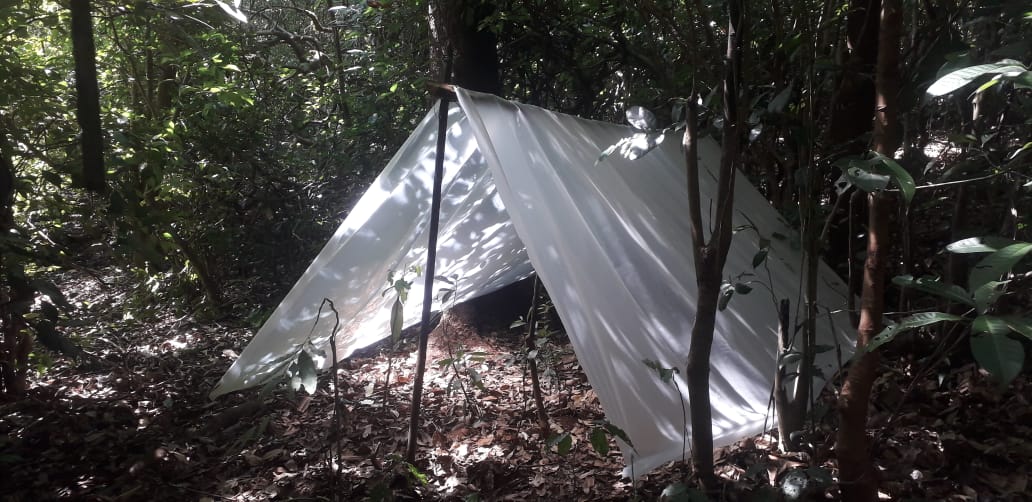
To investigate this, Dr Meghna Krishnadas and her team worked in a fragmented tropical forest landscape in the Western Ghats. They planted seedlings of 14 species near forest edges and deeper inside the forest. They then simulated drought conditions using a method known as “throughfall exclusion,” where the research team partially block rainfall from reaching the soil. Over the course of one year, the team recorded which seedlings survived.
As expected, preventing rainfall reduced soil moisture in all plots. But the effect was far stronger at the forest edge. Over time, soil moisture in drought-treated edge plots dropped much more sharply than in the forest interior. In other words, forest edges appeared to amplify drought conditions.
The team wanted to know whether certain kinds of seedlings were better equipped to survive these drier conditions. To find out, they measured several plant traits related to how species use resources. These included characteristics such as leaf dry matter content, leaf mass per area, stem and root tissue densities.
Together, these traits place plant species along a broad ecological spectrum.
At one end are what ecologists call “conservative species.” These plants invest heavily in building dense, durable tissues. Their leaves are tougher and their stems are denser. As a result, they tend to grow slowly but are often better protected against stress.
At the other end are “acquisitive species.” These plants follow a faster strategy. They produce lighter tissues and grow rapidly, allowing them to capture resources such as water, light, and nutrients whenever conditions are favourable.
When the researchers examined which seedlings survived drought conditions at forest edges, a clear pattern emerged.
Species with more acquisitive traits - for example, lower stem density and lower leaf dry matter content - showed higher survival under reduced soil moisture at the forest edge. This means seedlings that are built for faster resource uptake appeared better suited to these fluctuating, drier environments.
This pattern was much weaker inside the forest. In the shaded interior, where microclimatic conditions are more stable, plant traits were not as strongly linked to seedling survival.
One possible explanation is that water availability at forest edges can fluctuate sharply. Rather than enduring long periods of steady drought, seedlings may benefit from quickly capturing water during brief windows when it becomes available.
“Our study suggests that forest edges can act as ecological filters,” says Dr. Meghna Krishnadas, the principal investigator of the study. “When soil moisture is reduced, drier environments favour species with certain trait combinations. Why this happens requires us to delve into the species’ physiology of water use.”
Over time, this filtering effect could reshape the composition of fragmented forests. If droughts become more frequent as climate models predict, and forest fragmentation continues to expand the number of edges, these trait-based differences could influence which tree species successfully regenerate. Understanding these processes is important because the future of forests depends not just on the survival of mature trees, but also on the tiny seedlings growing beneath them. And at the forest edge, not all seedlings are equally prepared for the challenge.


0 Comments