

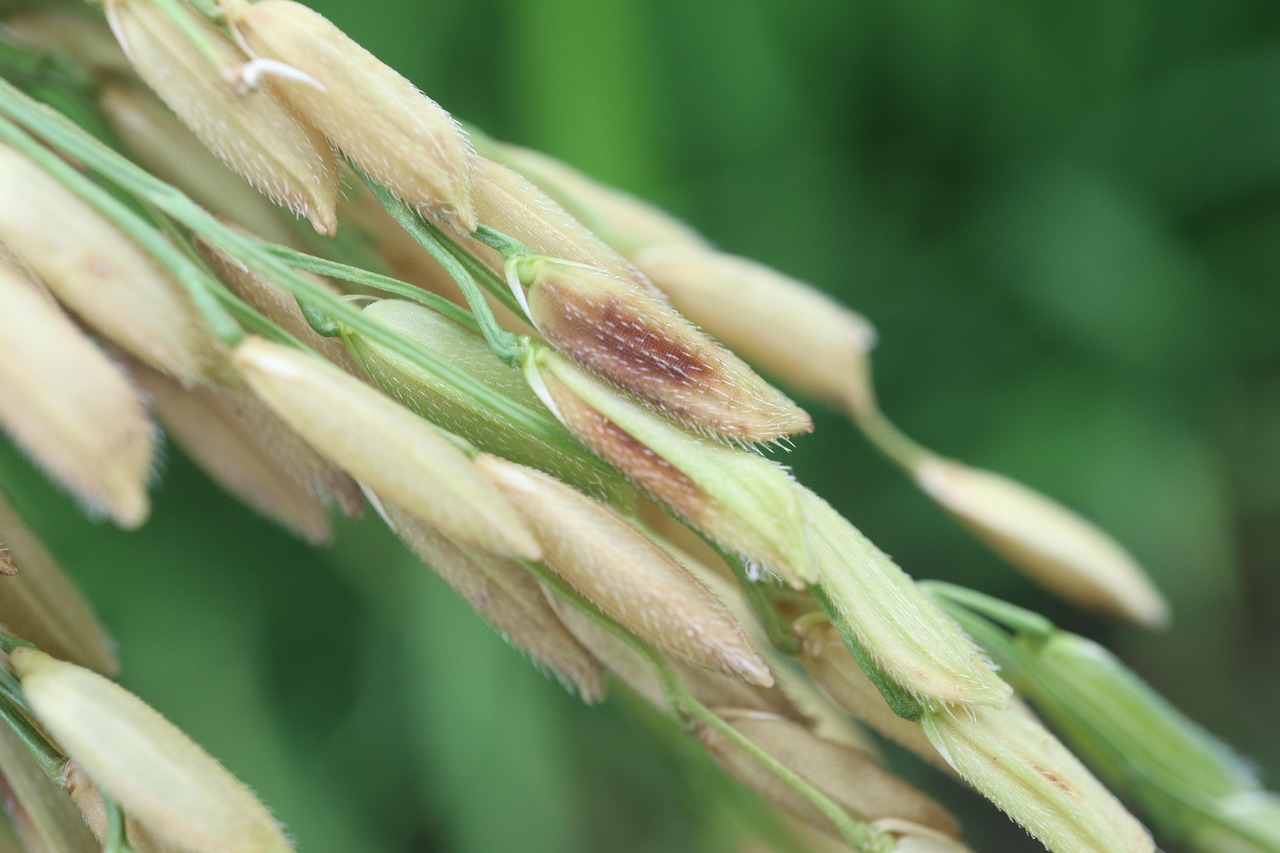
Rice feeds more than half of the world’s population. Yet, the quality of a rice grain depends on a series of finely tuned events that happen long before the grain reaches our plate. Deep inside a developing rice seed, there are molecular mechanisms that control how nutrients are stored and how the grain ultimately forms.
A study at NCBS understands a hidden layer of regulation inside the seed tissue that involves molecular machinery responsible for keeping certain genes silent. The findings show that when this system fails, the expression of many endosperm genes goes awry, which affects grain development and quality.
Plant genomes contain large numbers of “transposable elements”. These genetic elements can move around the genome and disrupt important genes if left unchecked. To prevent this, plants use mechanisms that silence these elements.
One important system that performs this task is “RNA-directed DNA methylation,” a process in which small RNA molecules guide chemical tags onto DNA. These tags act like “off switches,” preventing certain regions of the genome from being active.
But this system does not work alone. It relies on helper proteins that shape and organise DNA so that the silencing machinery can access the correct locations. Among these helpers are proteins called chromatin remodelers, which rearrange how DNA is packaged in the cell.
In rice, two such remodelers (OsCLSY3 and OsCLSY4) appear to play key roles in controlling gene activity in the grain. Previous research had already identified OsCLSY3 as an important player, specifically in rice seed development. However, the role of its close relative OsCLSY4 was still unclear, as it is ubiquitously expressed.
To understand what OsCLSY4 does in seed development, researchers used genetic tools to reduce or eliminate the function of the gene in rice plants. They then looked at how these altered plants developed and how gene activity changed inside their seeds.
“Plants lacking normal OsCLSY4 function showed defects in seed development. This means the process that packs starch and other nutrients into the grain did not proceed properly,” says Dr. Avik Kumar Pal, the lead author of the study.
“It suggested that OsCLSY4 plays a significant role in coordinating the genetic programs that shape the developing seed,” he added.
The team next looked at the molecular consequences of removing OsCLSY4. Using genome-wide analyses, they examined small RNA molecules and DNA methylation patterns across the rice genome.
Their results revealed that OsCLSY4 helps control the production of “small regulatory RNAs” that guide gene silencing. Many of these small RNAs target transposable elements and repetitive DNA sequences.
Without OsCLSY4, these regulatory molecules were produced at lower levels in many genomic regions. As a result, DNA methylation patterns changed and several genes that are normally tightly regulated in the endosperm became misexpressed.
Some of these genes are normally active only in specific parental copies of the genome. This phenomenon is known as genomic imprinting, which is particularly important in seed tissues. Disturbing this balance can interfere with proper seed development.
The study also found that OsCLSY4 and OsCLSY3 do not simply perform identical roles. While they sometimes act together, each protein also targets distinct regions of the genome. In effect, they form overlapping layers of control, ensuring that the correct genes remain active while others stay silent.
The endosperm makes up most of the edible portion of a rice grain. It is responsible for storing the starches and nutrients that determine grain size, texture, and nutritional quality.
When the regulatory systems controlling gene expression in the endosperm are disrupted, the effects can ripple through the entire seed. The researchers observed that defects in OsCLSY4 influenced reproductive growth and grain characteristics.
“It is not a surprise to see an epigenetic player such as OsCLSY4 playing a critical role in endosperm quality. Avik's previous work has identified OsCLSY3 as an upstream player of endosperm development through genome imprinting. OsCLSY4 is more to do with starch accumulation and thus it regulates nutrient quality. It will be a milestone if we can use OsCLSY4 knowledge to enhance the nutrient quality of seeds” says Prof. PV Shivaprasad, the lead author of the study.


0 Comments