-
Exploring Expressions In Nature : Dhara Mehrotra
Delhi based artist Dhara Mehrotra’s solo art installation 'Through Clusters & Networks... is the product of the Artist-in-Residence outreach program at NCBS-TIFR, and offers a closer look at how fungi and plants communicate with each other via a “Wood Wide Web”
-
A New Science Archives Preserves the Ways of Seeing Science's People
The curators of an art installation at the venue hope the exhibit will "de-science" science.
-
NCBS opens first of its kind archive in Bangalore
In a move that will probably make the National Centre for Biological Sciences (NCBS) founder Obaid Siddiqi elated, the institute has set up an archive for contemporary biology in India in the space that used to be his old lab.
-
History of biological research in museum
The Archives, an informal museum of sorts that records the history of the National Centre for Biological Sciences (NCBS) and contemporary biology research in the country, was inaugurated on Monday.
-
How your immune system uses chaos to prevent disease
New research, appearing in the journal Nature Communications, reveals a new mechanism that is at play in cellular function.
-
How the fruit fly experiences bitter taste
A team of researchers from National Centre for Biological Sciences, Tata Institute for Fundamental Research, Bengaluru (NCBS-TIFR), have figured out the neuronal circuitry that is involved in processing bitter taste.
-
A Bengaluru artist shows how plants talk to each other through the internet of fungus
The installation is one among the seven exhibits in artist Dhara Mehrotra’s latest exhibition, Through Clusters and Networks: The Wood-wide Web and Other Stories. Part of the Artist in Residence Outreach Programme at the National Centre for Biological Sciences, Bengaluru, the exhibition explores the intersection of art, science and technology.
-
A window into the mind: discovering how antipsychotic drugs affect the brain
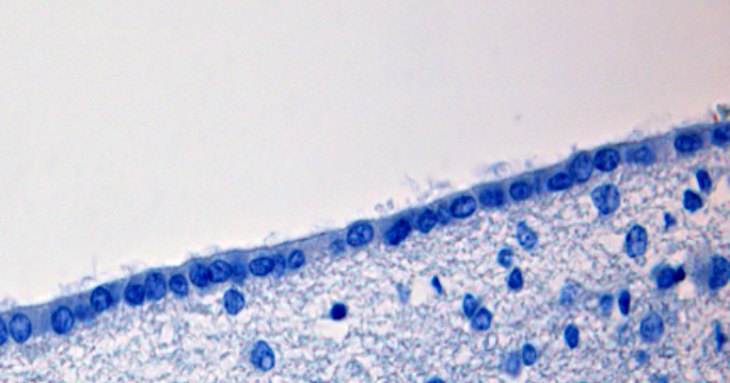
Researchers from the National Centre for Biological Sciences (NCBS), Bangalore, have developed a mouse model for detecting cells that respond to antipsychotic drugs in live brain tissues. Using this, the team have also discovered that the antipsychotics Clozapine and Olanzapine affect ependymal cells—a class of brain cells responsible for producing cerebrospinal fluid—previously unknown to be affected by antipsychotics.
-
Woodland buffers help maintain bird communities in forest edges, finds study
The structure of the vegetation determines the foraging areas and resources available to birds. It also provides protection from predation.
-
The Yin and Yang of ecology and evolution
The caterpillar of the swallowtail butterflies changes its appearance and colour at various stages of its elaborate life cycle, to escape predators. But, how exactly do they do this? A new study by researchers, Nikkil Gaitonde, Janhavi Joshi and Krushnamegh Kunte at the National Centre for Biological Sciences (NCBS), Bengaluru, answers some of these questions. The study was published in the journal Ecology and Evolution.