

The National Centre for Biological Sciences (NCBS) has developed a structured and evolving waste management system that spans its laboratories, administrative spaces, canteen, and green areas. Built and maintained by teams working across operations, safety, infrastructure, and other campus services, these systems ensure that different types of waste are segregated, treated, reused, or recycled responsibly. Over time, this coordinated effort has strengthened how the campus handles waste safely and sustainably.
Solid Waste Management: Most solid waste on campus is organic—food waste, garden clippings, dry leaves, and paper napkins. Instead of discarding it, this waste is converted into compost through composting and vermicomposting under the Site Waste Management Plan. The compost is used in the campus gardens, improving soil health and moisture while reducing landfill waste.
Biomedical waste management: As a biological research institute, NCBS laboratories generate biomedical waste. This waste is carefully separated using colour-coded bins: Yellow (anatomical waste, expired medicines, biological samples), Red (contaminated items like tubing and syringes without needles), Blue (damaged glassware), White (needles, blades, and sharps), and Chemical waste (expired chemicals and by-products). All biomedical waste is labelled and handed over to authorised agencies. Red-category waste is sterilised, shredded, and recycled as per safety guidelines.
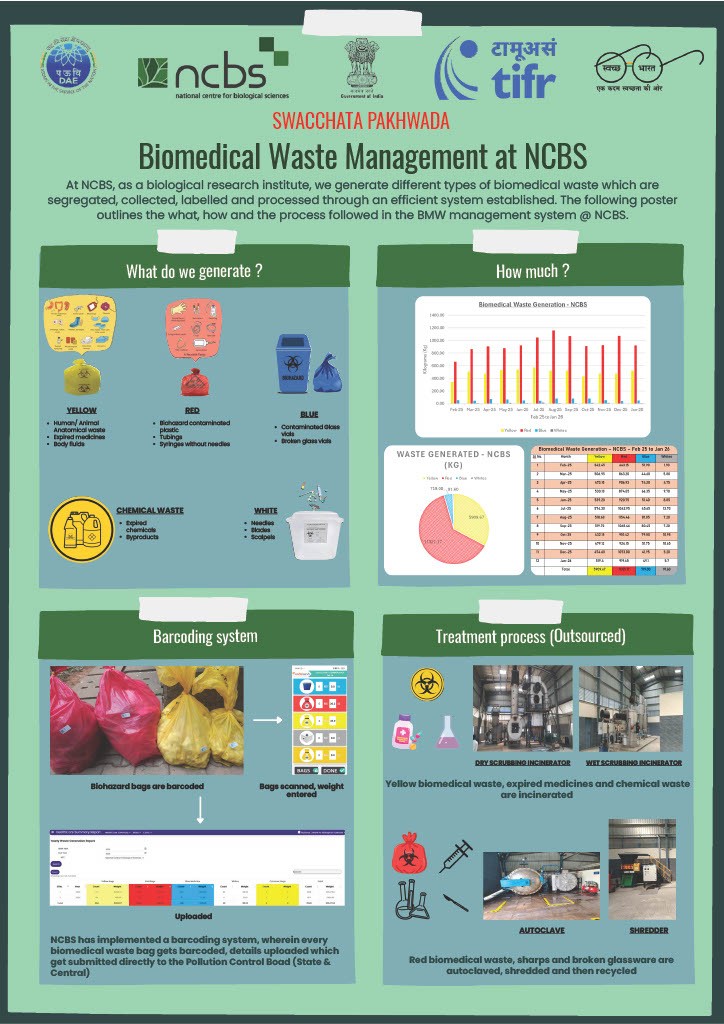
Poster by Akshay Tharali
Scrap & E-waste management: Damaged or outdated electronic equipment is disposed of through authorised vendors such as the Metal Scrap Trade Corporation Limited, ensuring responsible recycling.
Reuse of Packaging Material: Packaging materials like bubble wraps, crates, and cartons are reused wherever possible. Some are repurposed into racks and partitions, reducing unnecessary waste.
Inventory waste and Space optimization: To reduce paper use, equipment records, stock registers, and store reports have been shifted to digital formats. Over 14,700 asset and equipment records have been digitised in an organised manner.
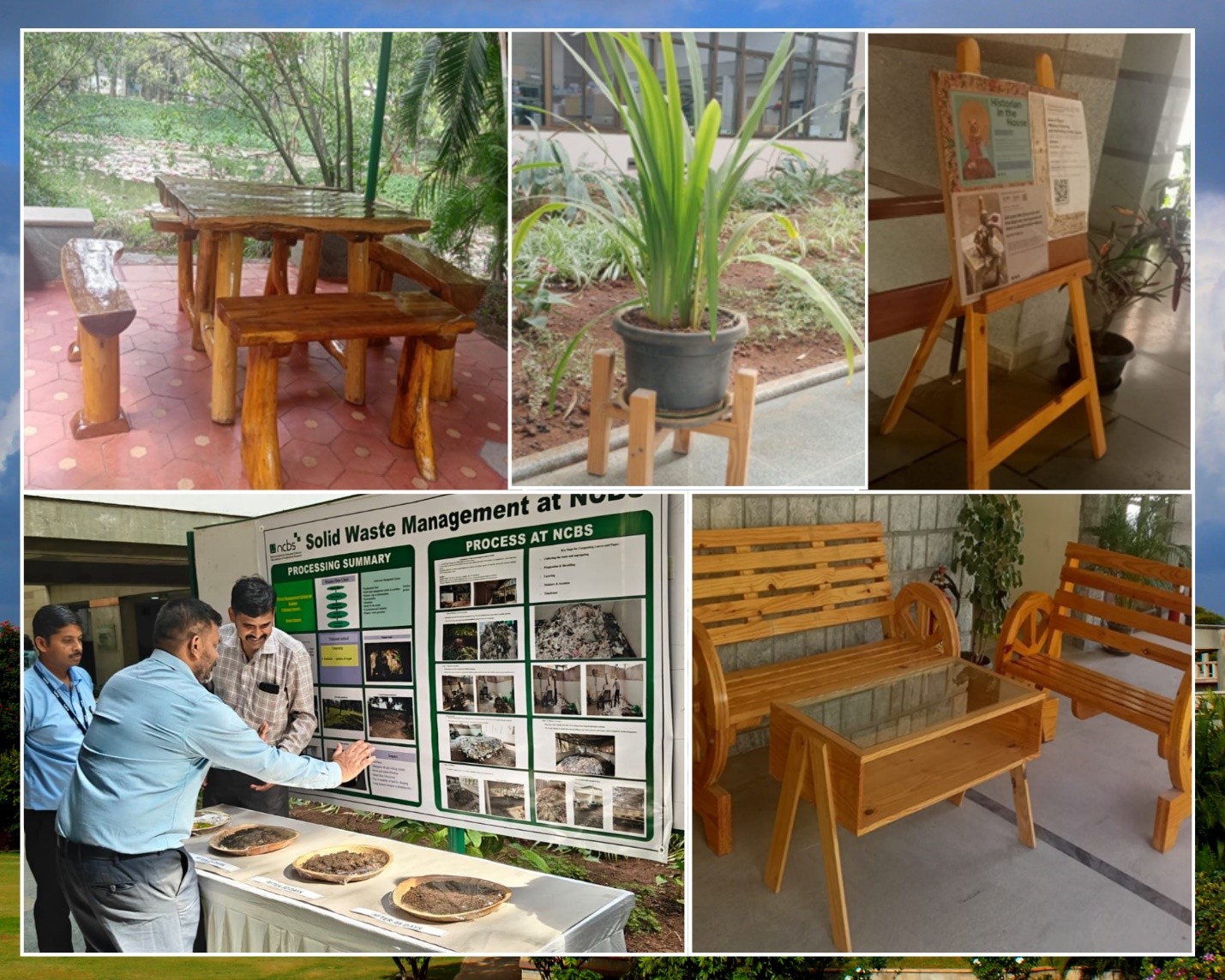
Along with these systems, the campus also looks at small, often unnoticed waste and finds creative ways to reuse it. Wood packaging is turned into furniture, treated wastewater is used to water gardens, fallen trees are converted into planters and benches, and even an abandoned bicycle has been revived into an e-bike. Lab spaces are improved through reuse and thoughtful adaptation.
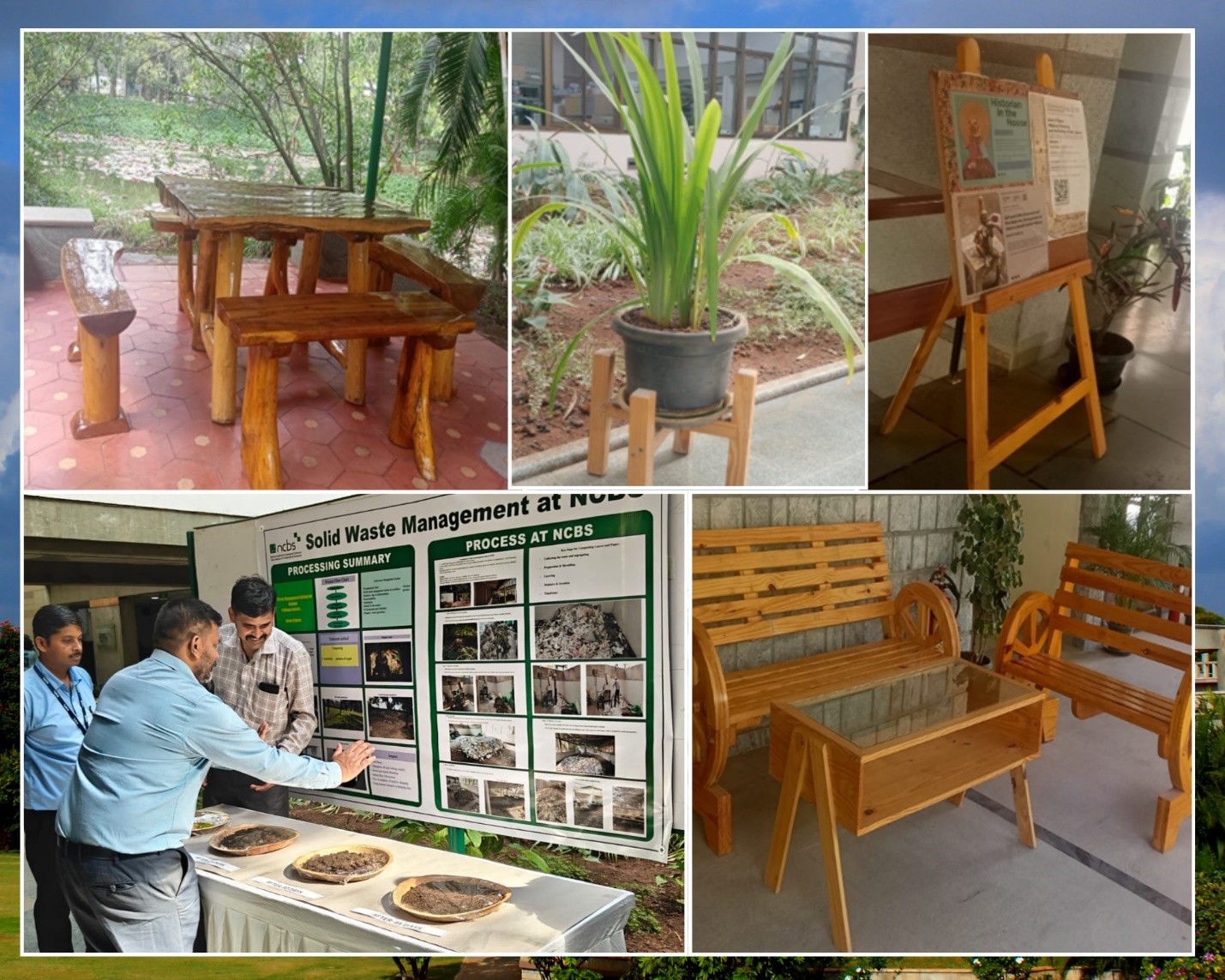
As part of the Swachhata Pakhwada campaign, the campus organised a series of activities that extended its waste management efforts beyond routine systems. These included plogging, cleaning drives, toilet repair work at Thindlu Government School, cleaning of surrounding areas and Attur Lake, a Waste to Wealth exhibition, a rally with a mass pledge ceremony, and a painting competition for government school students.
Together, these initiatives reflected NCBS’s continued commitment to responsible waste practices and community engagement.
(Information provided by Lab Support, Lab Saftey, Civil and Architechture teams)


0 Comments