-
Untangling cell signaling, one gene at a time
Fruit flies might be a nuisance to most people, but biologists have long valued them as an experimental model organism.
-
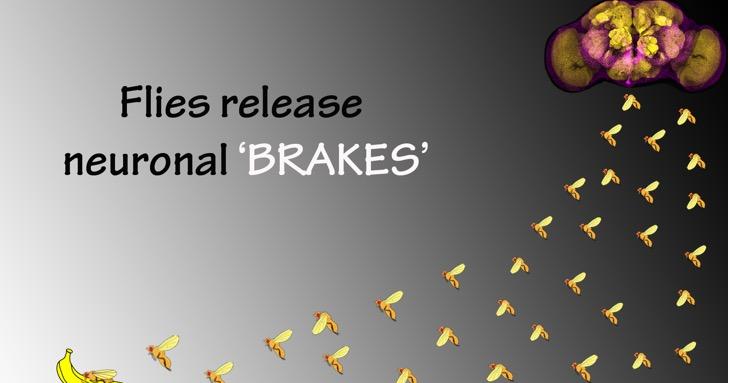
Flies release neuronal brakes to fly longer
For insects, flying is a swift way of getting around to find food, identify a mate and escape unfavourable conditions. While muscles provide the power for flying, it is the brain that coordinates strategic planning. For a hungry fly, this could mean using its powerful olfaction to sense the presence of food such as a rotten banana and then navigating the distance to reach it, which may require flying for several minutes or even an hour or more. How does the insect brain coordinate the timing for such long flight bouts?